
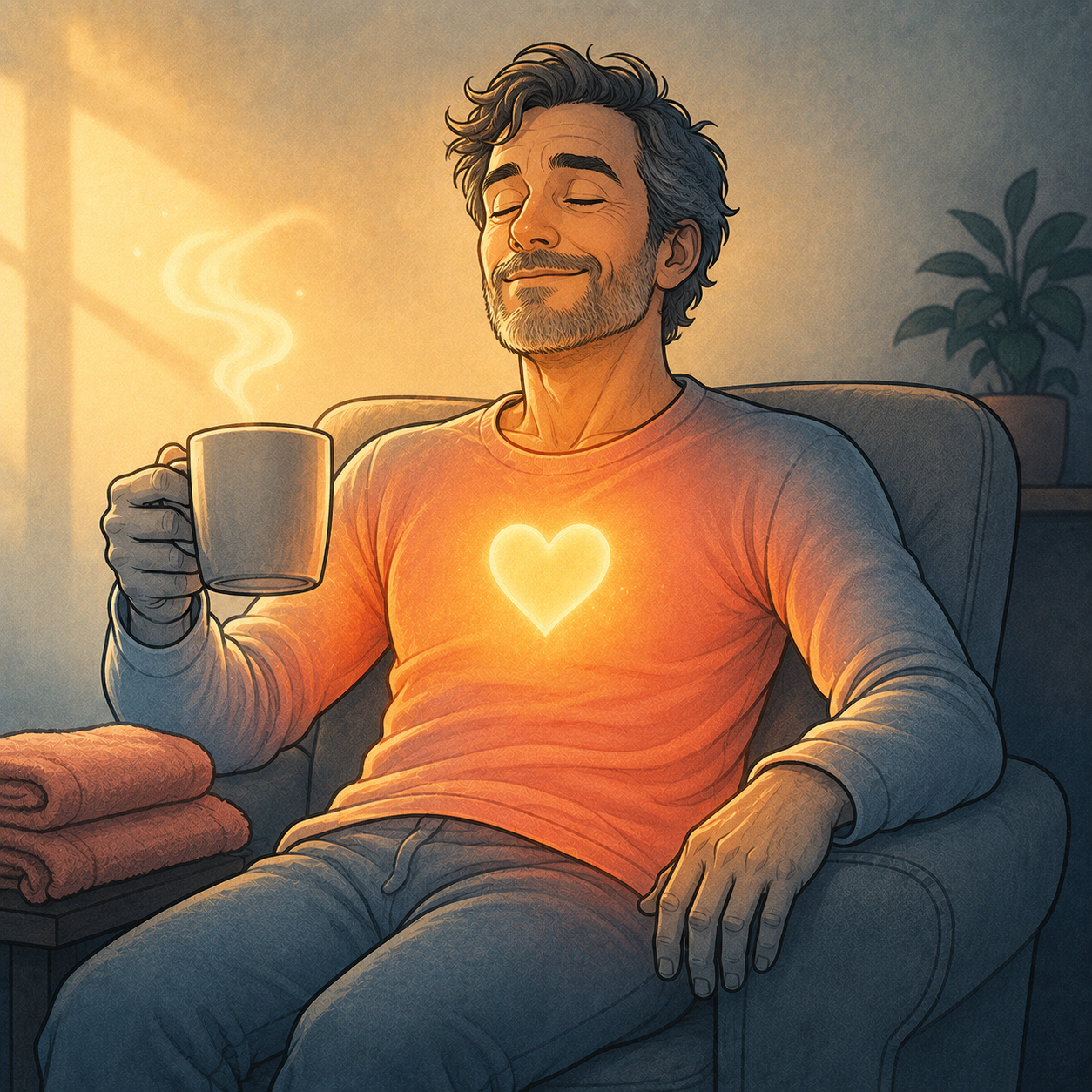
The Practice That Literally Changes Your Body's Chemistry
Think of one thing you're grateful for. Not a big thing — a small one. The smell of coffee. A warm towel. A text from someone who cares.
Think of one thing you're grateful for right now.
Not a big thing. A small one. The smell of your morning coffee. A warm towel fresh from the dryer. A text from someone who was thinking about you. The way sunlight falls across the floor.
Notice what happens in your chest. Something softens. Something loosens. A tightness you didn't even know you were carrying — releases.
That's not just a nice feeling. That's your body's chemistry literally shifting.
Here's what's happening: When you feel genuine gratitude, your brain releases feel-good chemicals. Your heart rate drops. Your blood pressure drops. Your stress hormones — the ones that age you — drop. Your nervous system shifts out of "fight or flight" and into "rest and repair."
In that moment, you're not just happier. You're healthier. Your body is doing the opposite of aging.
Here's the deeper truth: You cannot age well in a body that's always bracing for impact. And most bodies are. All day, every day, tensed against what might go wrong. Gratitude is the antidote — not because it's spiritual or sentimental, but because it tells your nervous system: you're safe. Right now, in this moment, you have enough. You are okay.
And when your body believes it's safe, it stops aging in overdrive and starts repairing.
Here's what to do: Before you fall asleep tonight, think of three small things you're grateful for. That's it. Feel them. Let the softness spread through your chest.
The fountain of youth isn't just in what you do. It's in what you feel.
---
Want more tips on living younger, longer? Sign up below and I'll send them straight to your inbox.
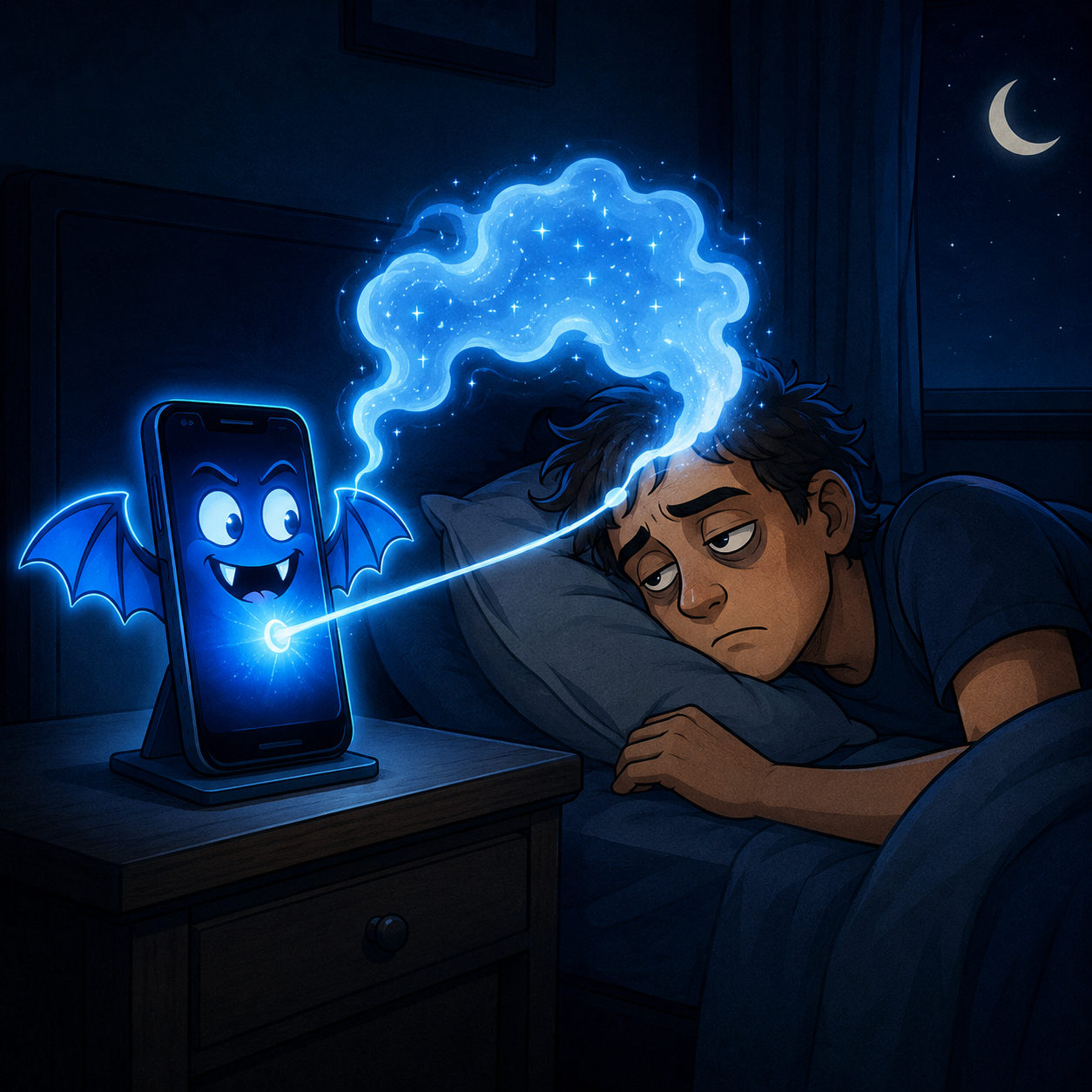
Your Phone Is Stealing Your Sleep — And Your Youth
Scroll through your phone in bed and notice what happens to your body. Your eyes strain. Your chest tightens. Your mind starts racing.
Scroll through your phone in bed tonight, and notice what happens to your body.
Your eyes strain. That dry, burning feeling creeps in. Your chest tightens — you can feel it, that physical tension that builds as you scroll. Your mind starts racing. One thing leads to another, and suddenly it's 45 minutes later and you're wide awake, wired, unable to wind down.
That blue light from your screen isn't just keeping you awake. It's telling your brain it's daytime.
Here's what's happening: The blue light from your phone blocks the hormone that tells your body it's time to sleep. Your brain literally reads the light as sunlight and says, "Stay awake. Stay alert. It's still daytime." So instead of winding down, your body stays in wake mode. Your stress hormones stay elevated. Your body temperature stays up. You lie there, exhausted but unable to sleep.
And the content itself? Scrolling through news, social media, emails — it's designed to keep you engaged. To trigger small hits of pleasure that keep you coming back for more. Your nervous system gets activated right when it should be shutting down.
You're not just losing sleep. You're stealing your own rest — the rest your body uses to repair, rebuild, and keep you young.
Here's what to do: Put the phone down at least two hours before bed. Not five minutes. Two hours (at least) — to give the sleep hormone melatonin time to start building back up. Close your eyes. Breathe. Feel the quiet settle in like a blanket over you. That stillness — that's what healing feels like.
The fountain of youth turns off the screen.
---
Want more tips on living younger, longer? Sign up below and I'll send them straight to your inbox.
Your Health & Safety: This site’s content is for educational and informational purposes only and is not medical advice. Please read our Important Medical Disclaimer.
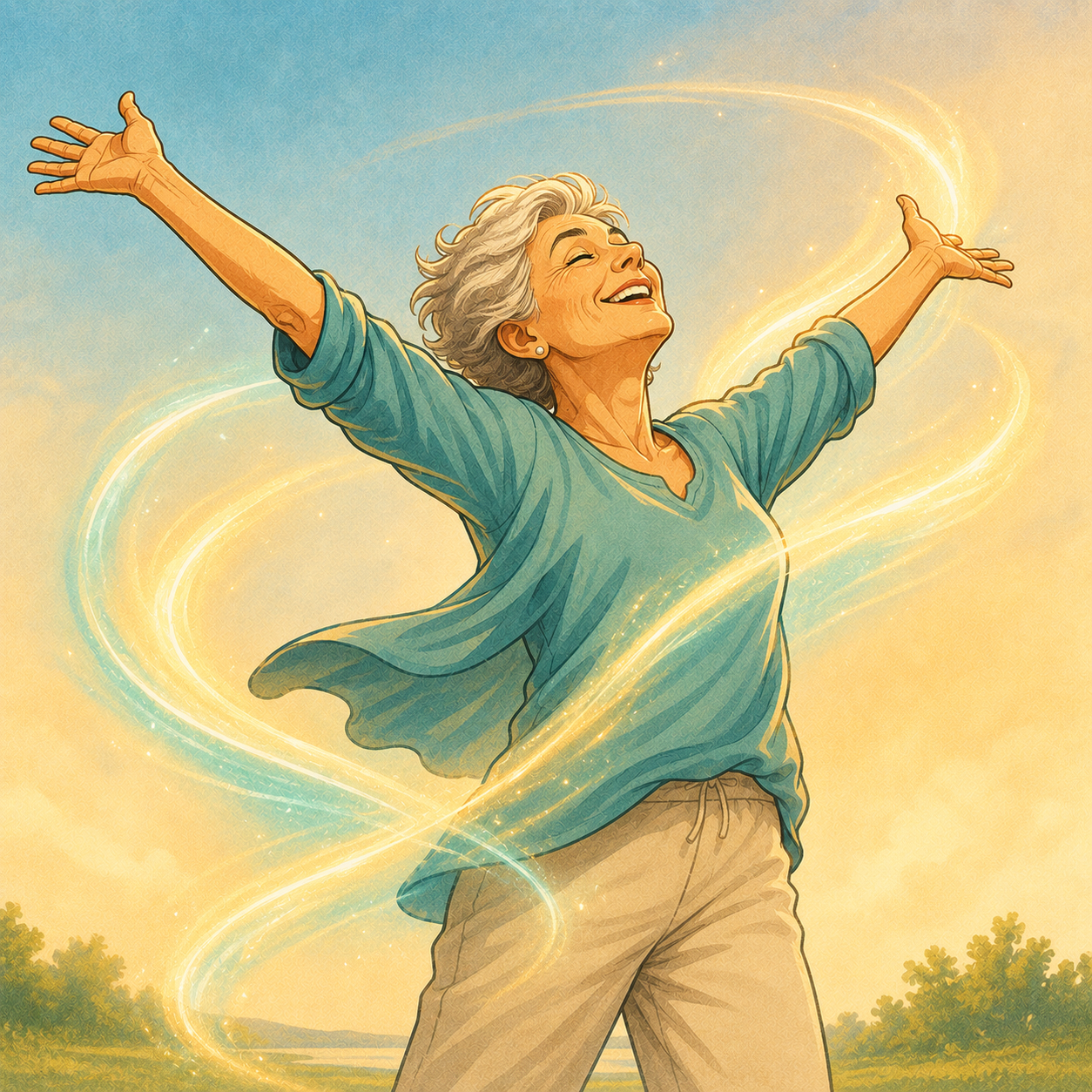
Your Body Remembers How to Be Young — Remind It
When's the last time you reached for the ceiling and just held it? Try it now. Reach up. Feel the pull all the way down your sides, through your ribs, into your hips.
When's the last time you reached for the ceiling and just held it?
Not a workout. Not a routine. Just reached up, as far as you could, and stayed there.
Try it now. Reach up. Feel the pull — all the way down your sides, through your ribs, into your hips. Notice how tight that feels. How your body resists. How there are places that haven't stretched like that in months. Maybe years.
That tightness you feel? That's time. Stored in your body.
Every hour you sit, every day you don't move, every year you spend in the same limited range of motion — your body adapts. It shortens. It tightens. It builds the connective tissue that wraps around your muscles into patterns of restriction. Not because you're old. Because you haven't moved.
Here's the good news: Your body remembers what it's like to be young. It remembers full range of motion. It remembers being fluid, easy, the feeling of moving without resistance. You just have to remind it.
Stretching does more than make you flexible. It increases blood flow to your muscles and joints. It triggers the production of the fluid that keeps your joints moving smoothly. It releases tension stored in your connective tissue — the tight, sticky stuff that makes you feel stiff and old. It improves your posture, your circulation, and your mood.
Here's what to do: Reach for the ceiling. Hold it for 30 seconds. Then reach to the side. Then fold forward and let your arms hang. Don't force it. Just breathe into each stretch and feel your body slowly let go.
The fountain of youth isn't about doing more. It's about undoing what time has done.
---
Want more tips on living younger, longer? Sign up below and I'll send them straight to your inbox.

Your Health & Safety: This site’s content is for educational and informational purposes only and is not medical advice. Please read our Important Medical Disclaimer.
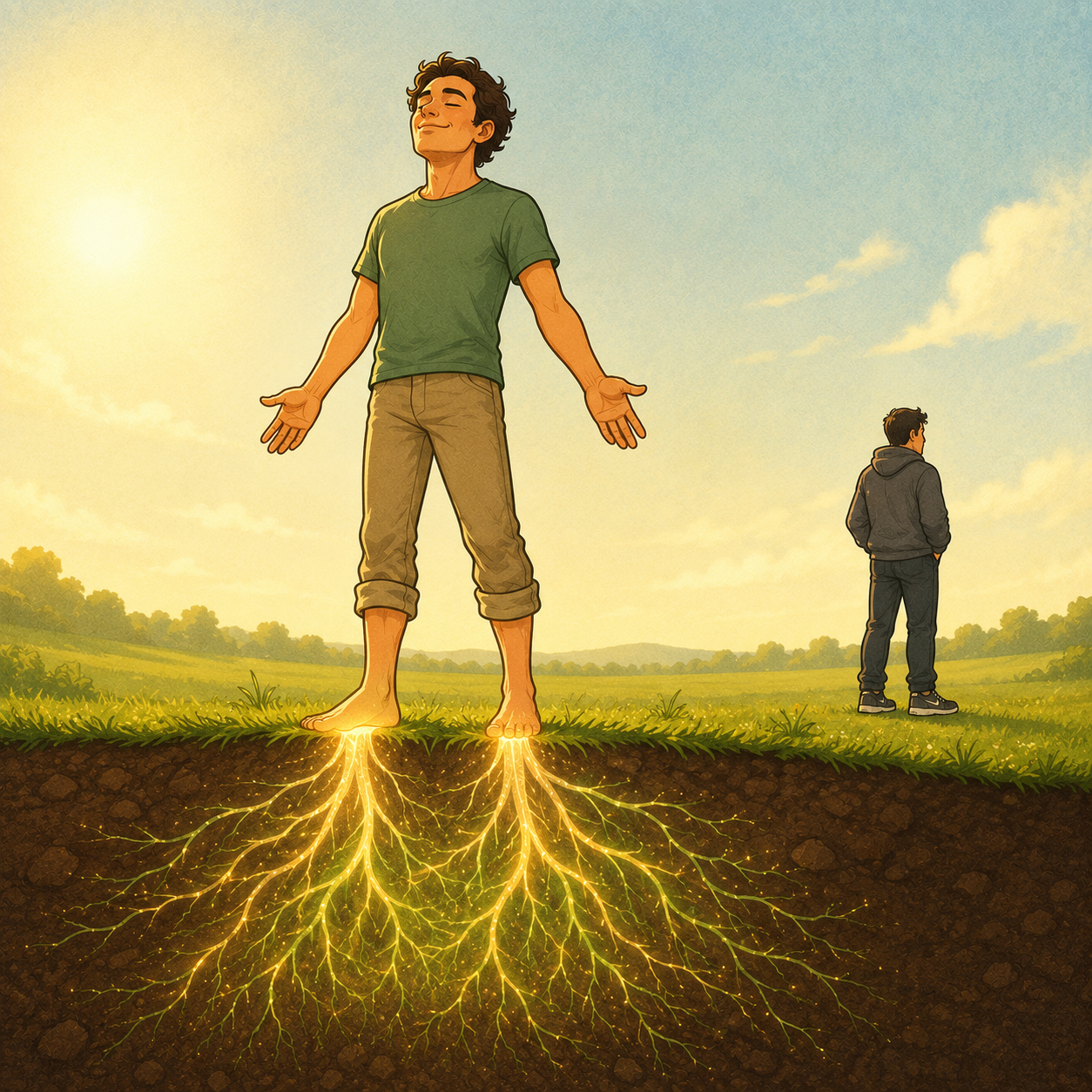
Why Putting Your Bare Feet on the Ground Changes Your Body
Go outside. Put your bare feet on grass, dirt, sand — whatever you've got. Notice how the ground feels cool and alive under you.
Go outside. Take off your shoes. Put your bare feet on grass, dirt, sand — any natural surface in contact with the ground. Not carpet, not rubber, not synthetic flooring. The material has to be natural..
Notice how the ground feels. Cool. Slightly damp. Textured. Alive, in a way that carpet and synthetic tile never are.
There's something that happens when you connect to the earth this way. Something you can feel before you can explain it.
That restless buzz in your body — the low-grade hum of tension, the wired-but-tired feeling — starts to quiet down. Your nervous system settles. Your breathing slows. You feel rooted. Grounded. Like you belong somewhere.
Here's what might be happening: The earth carries a natural electrical charge. When you make direct contact with it, your body may absorb tiny particles that act like antioxidants — the stuff that fights inflammation and aging.
It's called "earthing" or "grounding," and while the research is still new, what's clear is this: people who spend time in nature — especially with direct contact — report less pain, better sleep, lower stress, and a sense of calm they can't get any other way.
But here's what I know for sure: The feeling is real. You can feel it. The moment your feet touch the ground, something shifts.
We spend our lives insulated — rubber soles, concrete floors, fake surfaces — cut off from the earth we were built to walk on. And then we wonder why we feel restless, disconnected, ungrounded.
Here's what to do: Take off your shoes. Stand on the grass for two minutes. That's it. Notice the shift.
The fountain of youth is under your feet.
---
Want more tips on living younger, longer? Sign up below and I'll send them straight to your inbox.

Your Health & Safety: This site’s content is for educational and informational purposes only and is not medical advice. Please read our Important Medical Disclaimer.
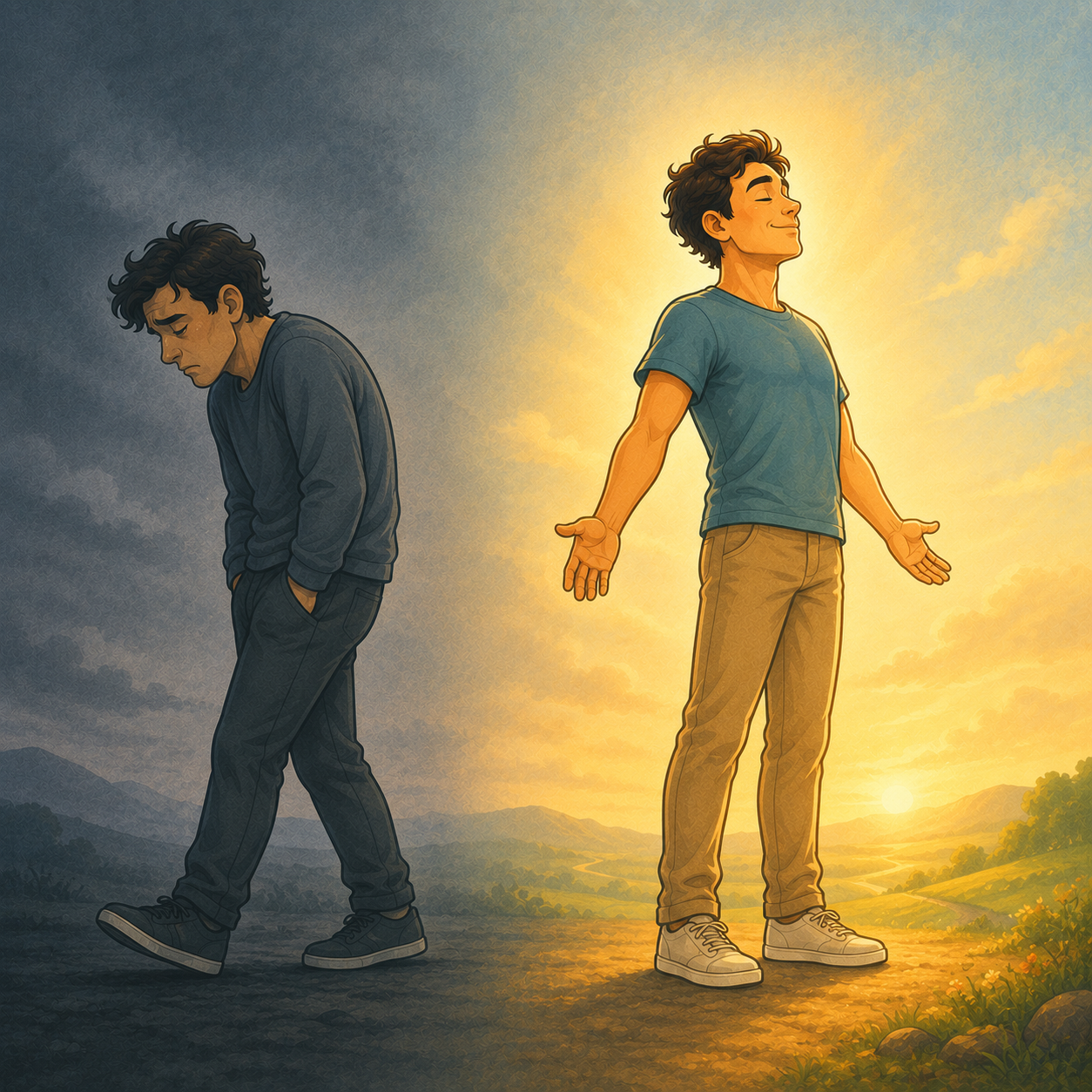
Your Posture Is Telling Your Body Whether to Thrive or Shrink
Slouch right now. Shoulders forward, head down. Notice how you feel — heavy, tired, small.
Slouch right now. Shoulders forward. Head down. Chest collapsed.
Notice how you feel. Heavy. Tired. Small. Like the weight of everything is pressing down on you. Your energy drains. Your mood dips. You feel like hiding.
Now pull your shoulders back. Lift your chin. Open your chest.
Notice the shift. You feel lighter. More alert. More present. Even a little braver — like you could handle whatever comes next.
That's not in your head. Your body reads your posture as a signal: am I thriving, or am I shrinking?
Here's what's happening: When you slouch, you squeeze your lungs, making each breath shallower. You restrict blood flow. You send your nervous system the message that you're under threat — curled up, protecting your center. Your body responds: more stress hormones, less energy, lower mood.
When you stand tall, everything opens up. Your lungs expand. Your breathing deepens. Your nervous system gets the signal that you're safe, confident, in charge. Your body responds with more energy, better mood, clearer thinking.
And over time, posture does real damage. Slouching compresses your spine, strains the muscles in your neck and upper back, and can lead to headaches, jaw pain, and pinched nerves. It ages you from the outside in and the inside out.
Here's what to do: Check your posture right now. Shoulders back. Chin level. Chest open. Take a breath and notice how much deeper it is.
The fountain of youth stands up straight.
---
Want more tips on living younger, longer? Sign up below and I'll send them straight to your inbox.

Your Health & Safety: This site’s content is for educational and informational purposes only and is not medical advice. Please read our Important Medical Disclaimer.
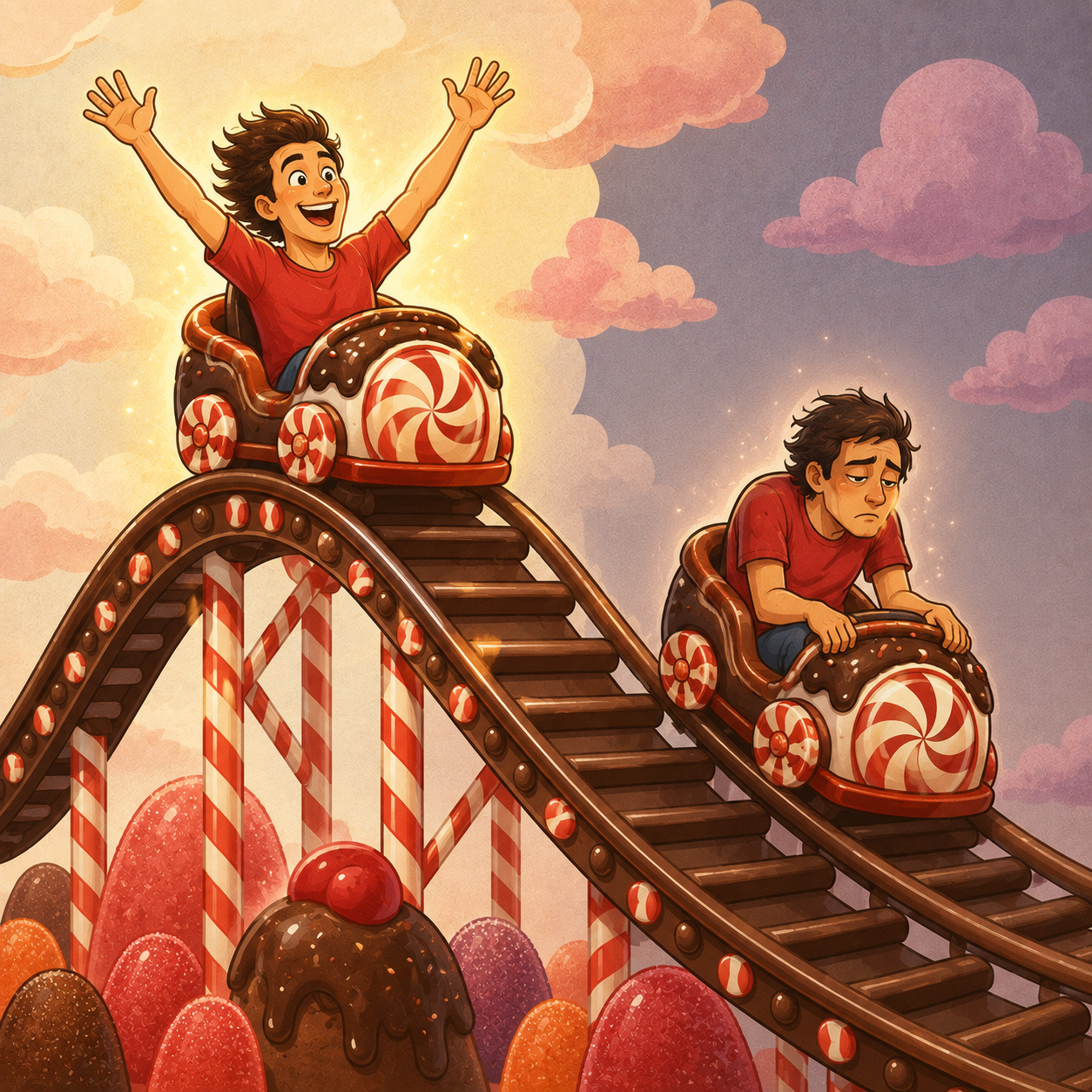
The Sugar Crash Is Aging You Faster Than You Think
Eat something sweet and notice what happens. The first bite feels great — almost euphoric. Twenty minutes later, you're dragging. Brain fog. Irritable. Reaching for more.
Eat something sweet. A cookie. A piece of candy. That mid-afternoon pastry you tell yourself you earned.
Notice what happens.
The first bite feels great. Almost euphoric. A warm wave of pleasure washes over you. Your brain lights up. For about twenty minutes, you feel wonderful.
Then it hits. The crash. Your energy plummets. Your brain fogs. You become irritable — snappy, short, on edge. You reach for more. Something sweet. Something with caffeine. Something to pull you back up.
That cycle — up, then down, then desperate for more — isn't weakness. It's your body aging in fast-forward.
Here's what's happening: When you eat sugar, your blood sugar spikes. Your body responds by pumping out insulin — a lot of it — to bring it back down. But it overshoots. Your blood sugar crashes below where it started. That crash is what you feel: the fog, the fatigue, the irritability, the craving.
And every spike does damage. Sugar molecules stick to proteins in your body. It stiffens your blood vessels. It damages the stuff that keeps your skin firm and elastic. It creates inflammation — the kind that damages joints, arteries, and brain cells.
Every sugar spike takes something from you. Quietly. Over years.
Here's what to do: Next time you crave something sweet, eat a handful of nuts instead. Or drink water. Or take a ten-minute walk. Notice how different you feel an hour later — steady, clear, calm — compared to the sugar rollercoaster.
The fountain of youth isn't sweet. It's steady.
---
Want more tips on living younger, longer? Sign up below and I'll send them straight to your inbox.

Your Health & Safety: This site’s content is for educational and informational purposes only and is not medical advice. Please read our Important Medical Disclaimer.
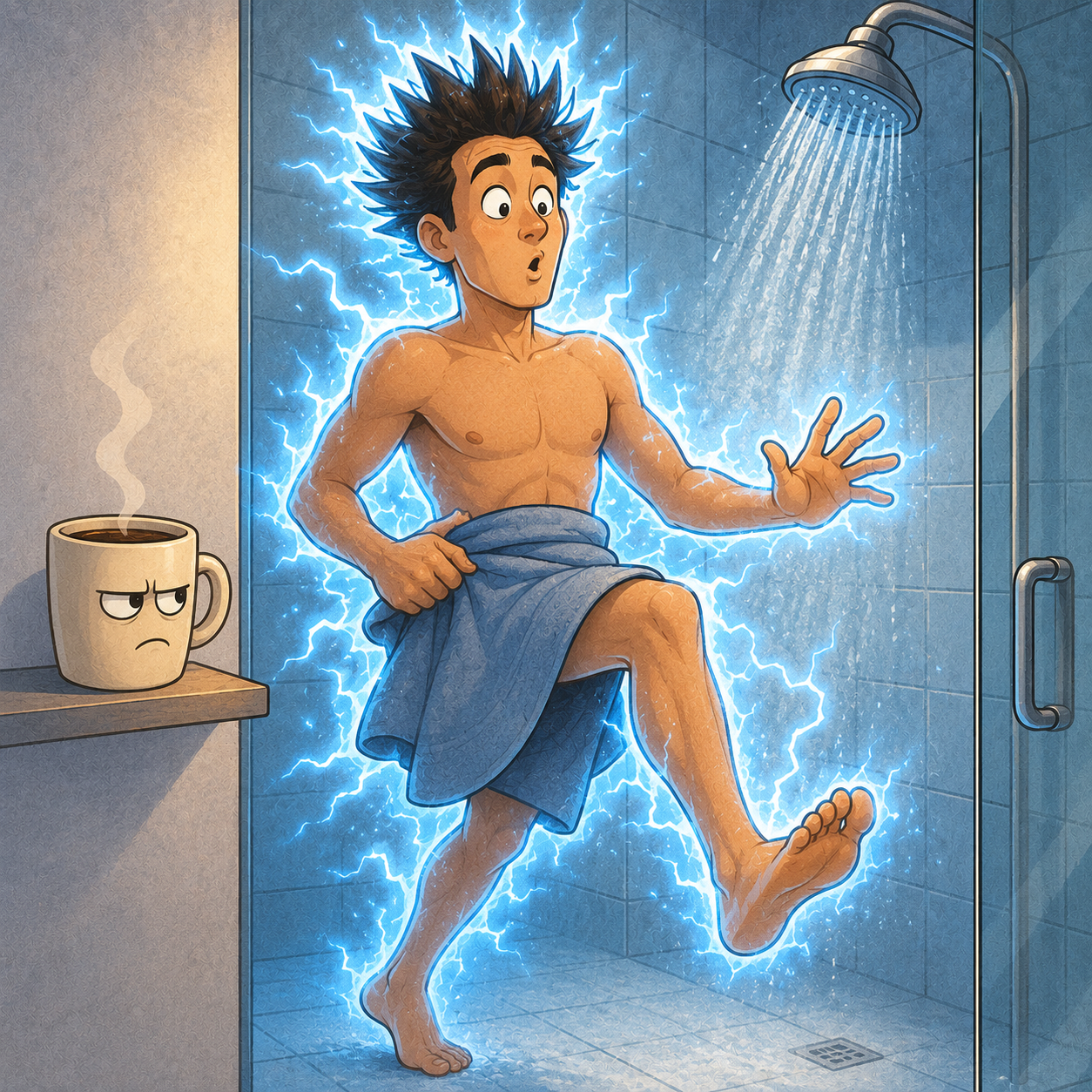
The Cold Water Trick That Jump-Starts Your Body
Splash cold water on your face. Or, if you're brave, step into a cold shower.
Notice that gasp. That jolt. That surge that makes every nerve in your body fire at once. You feel electric. Alert. Alive in a way that coffee can never match.
That's not just a shock. That's your body turning on systems that have been half-asleep.
Here's what's happening: When cold water hits your skin, your body responds instantly. Blood rushes from your skin to your core, protecting your vital organs. Your body floods with a natural chemical that wakes up your brain, lifts your mood, and calms inflammation.
Cold also wakes up something called brown fat — a special kind of fat that actually burns energy to keep you warm. It's the fat that keeps babies warm, and most adults have lost most of it. Cold brings it back.
And here's the part that matters most: Cold makes your body tougher. It trains your nervous system to handle stress better. Every time you voluntarily step into discomfort, you're teaching your body that it can handle hard things. That toughness — physical and mental — is one of the closest things we have to a fountain of youth.
Here's what to do: Start small. Splash cold water on your face at the end of your morning shower. Thirty seconds of cold. Notice the shift. Feel the aliveness.
You feel younger because, in a way, you are.
---
Want more tips on living younger, longer? Sign up below and I'll send them straight to your inbox.

Your Health & Safety: This site’s content is for educational and informational purposes only and is not medical advice. Please read our Important Medical Disclaimer.
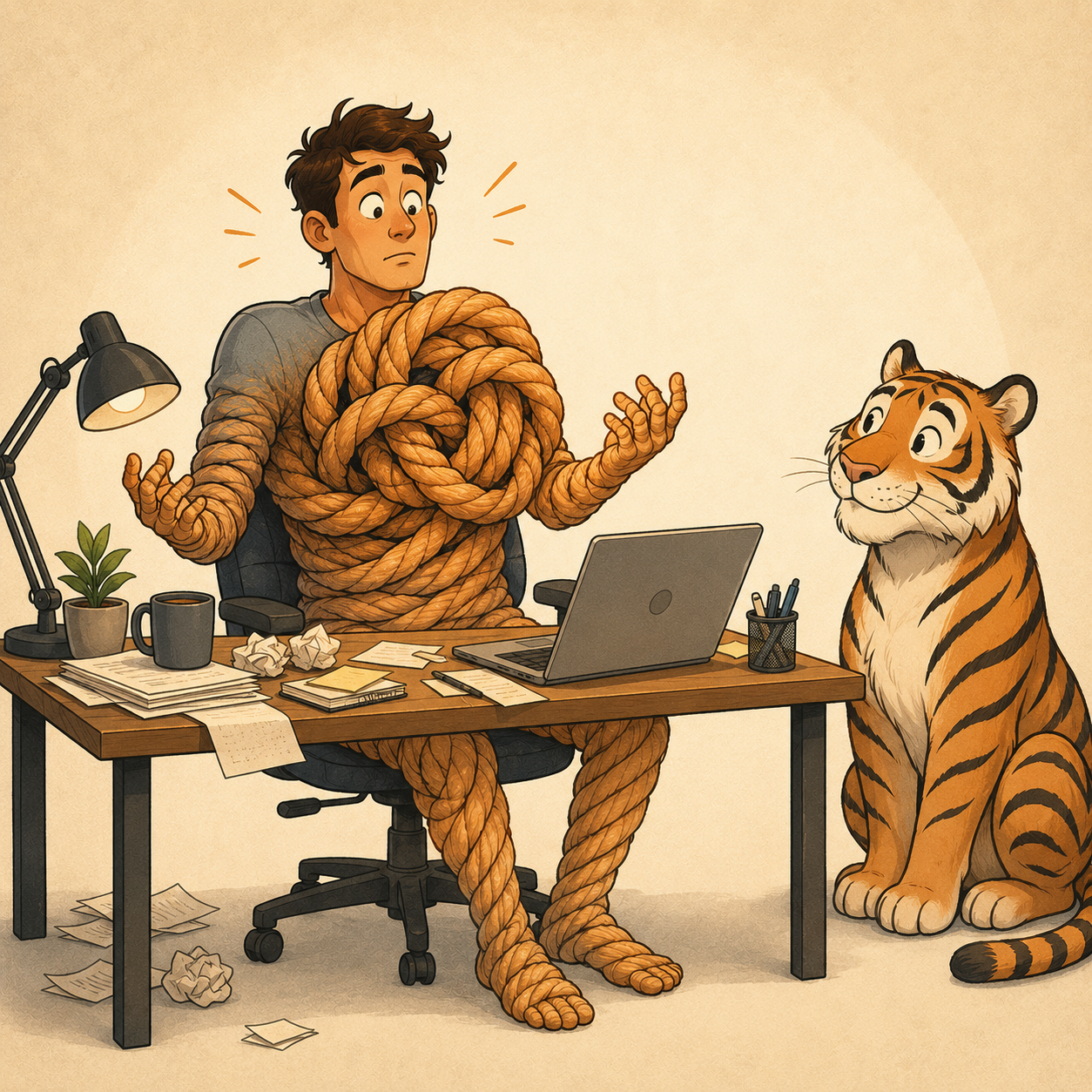
The Silent Killer You Can Feel But Keep Ignoring
That tight jaw. The shallow breathing. The pit in your stomach that won't go away. That's not 'just life.' That's a chemical flood aging you from the inside out.
That tight jaw. The shallow breathing. The pit in your stomach that won't go away.
You call it "just life." You call it "being busy." You call it "normal."
It's not normal. It's a chemical flood aging you from the inside out. And you can feel it.
When you're stressed — really stressed, the kind that lives in your body all day — your body pumps out stress hormones. These hormones were designed for short bursts: run from the tiger, then relax. But you're not running from a tiger. You're sitting at a desk, clenching your jaw, breathing shallow, chest tight, stomach churning — for hours. For days. For years.
Here's what that does: Your immune system weakens. Your blood vessels tighten. Your digestion shuts down. Your cells age faster. The protective caps on the ends of your DNA — the parts that keep your cells young — get shorter. And shorter caps are one of the most reliable signs of aging.
You can feel it happening. That sense of being "wound tight." That exhaustion that sleep doesn't fix. That feeling of wearing down, fraying at the edges.
Here's what to do: The moment you notice it — and you will notice it, because your body is always telling you — breathe. One long, slow breath. In through your nose, deep into your belly, out through your mouth. Feel the difference. That's your body hitting the brakes on the chemical flood.
The fountain of youth isn't just about what you do. It's about what you stop carrying.
---
Want more tips on living younger, longer? Sign up below and I'll send them straight to your inbox.

Your Health & Safety: This site’s content is for educational and informational purposes only and is not medical advice. Please read our Important Medical Disclaimer.
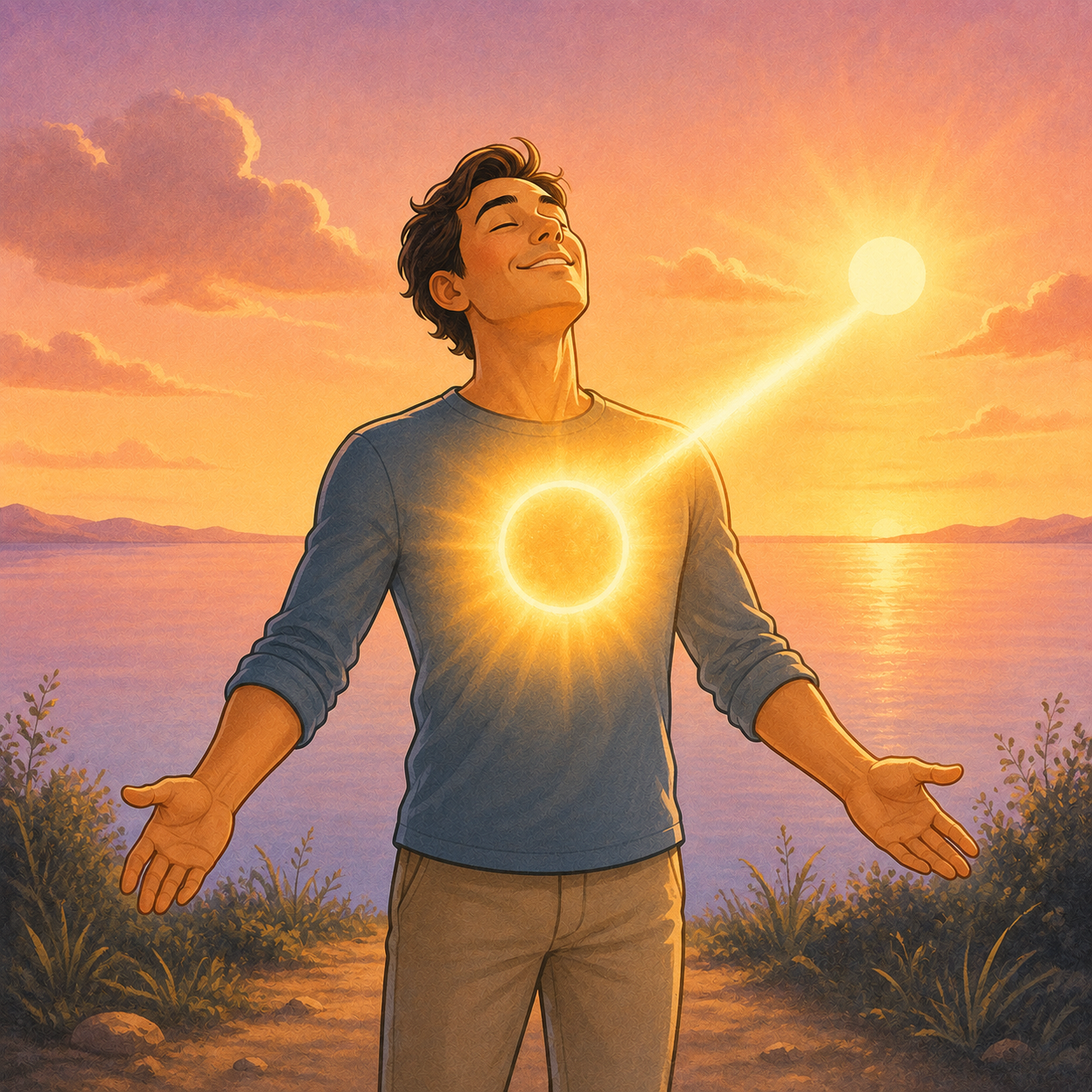
The Morning Habit That Resets Your Entire Body
Step outside first thing in the morning. Feel that light hit your face. Something inside you wakes up — not just your eyes, but something deeper.
Step outside first thing in the morning. Before your phone. Before coffee. Before anything.
Feel that light hit your face.
Something inside you wakes up. Not just your eyes — something deeper. A switch flips. Your body stirs. You feel more alert, more present, more alive than you did standing in your kitchen under artificial lights.
That light is doing something amazing. It's telling every cell in your body: it's time to be awake. It's time to be alive.
Here's what's happening: Morning sunlight enters your eyes and sets off a chain reaction. It sets your body's internal clock. It tells your brain to stop making the sleep hormone and start making the feel-good hormone. It regulates your energy so you feel awake in the morning and sleepy at night.
When you miss it, you feel it all day as a heaviness you can't explain. You're sluggish in the morning. Wired at night. You can't fall asleep. You wake up tired. You reach for caffeine to force yourself awake and then alcohol or screens to force yourself to sleep.
It's a cycle. And morning light breaks it.
Here's what to do: Step outside for five to ten minutes within an hour of waking. Don't wear sunglasses. Face the light. It doesn't need to be sunny — even cloudy light works (just increase your time outside). Your body knows the difference between daylight and indoor light, even if your eyes don't.
The fountain of youth starts with the sun.
---
Want more tips on living younger, longer? Sign up below and I'll send them straight to your inbox.

Your Health & Safety: This site’s content is for educational and informational purposes only and is not medical advice. Please read our Important Medical Disclaimer.
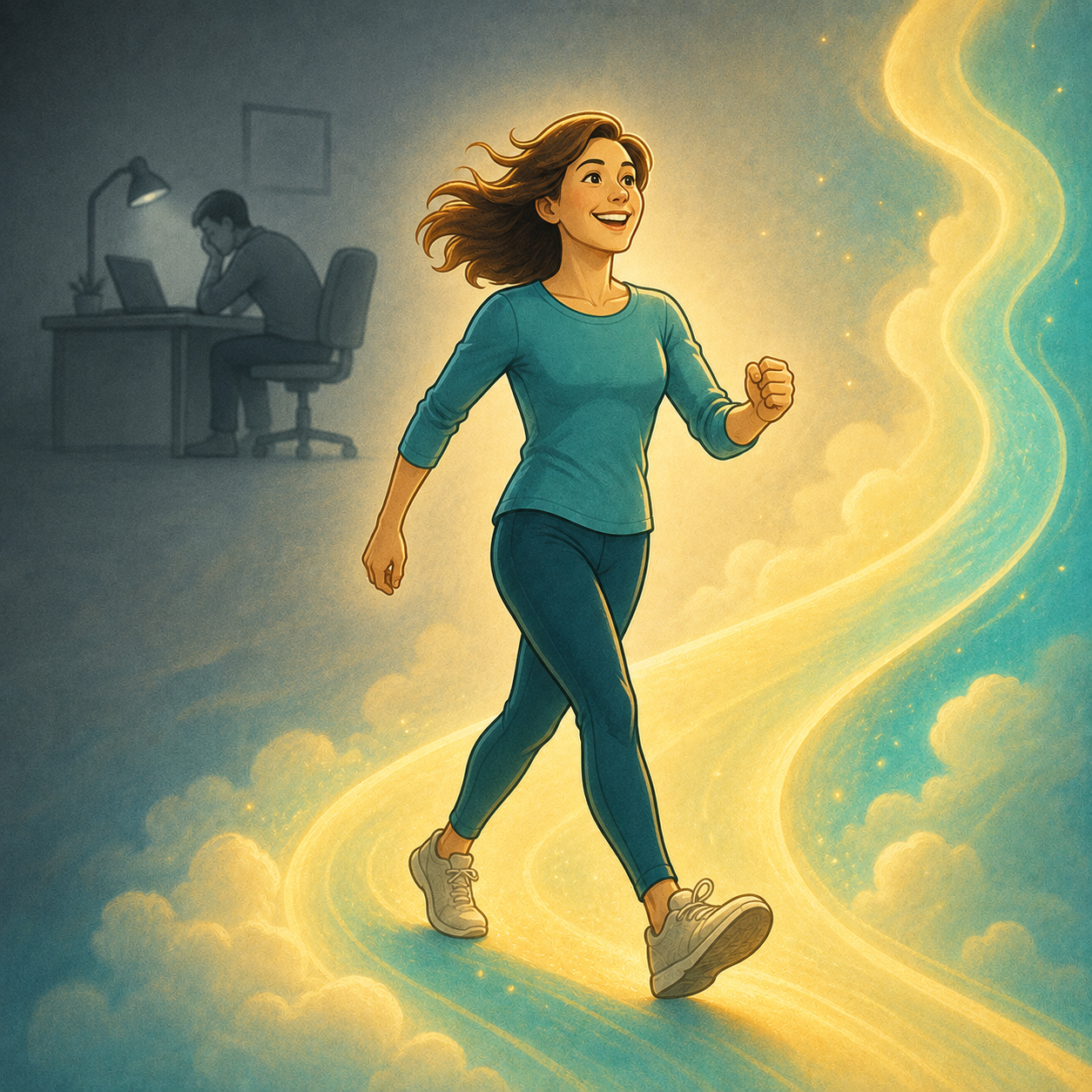
Why Ten Minutes of Walking Changes Everything
Go walk for ten minutes. That's it. Notice how your shoulders drop. Notice how your breathing slows.
Go walk for ten minutes.
Do not search for the perfect route. Do not wait for better shoes. Do not download an app to prepare for this historic journey.
Just walk.
By the time you finish explaining why you cannot, you could already be halfway home.
Ten Minutes Opens the Door
Ten minutes is not a magical number. It is an easy entrance into movement.
The moment you begin walking, your muscles stop sitting around like unemployed teenagers and report for duty. They contract, demand fuel, and help move blood throughout your body.
Your ankles bend. Your knees move. Your hips begin swinging. The fluid inside your joints spreads across their surfaces as you move, helping them glide more easily.
Your body does not need an hour-long workout before it notices. Movement begins changing the conversation immediately.
Sugar Gets Somewhere to Go
After you eat, sugar enters your bloodstream. Walking gives that sugar somewhere useful to go.
Working muscles can pull sugar from the blood and use it for energy. That is why walking soon after a meal can reduce the size of the blood-sugar rise that follows eating.
Instead of leaving sugar circling through your bloodstream like a taxi that cannot find its passenger, your muscles open the door and invite it inside.
Ten minutes after a meal is not wasted exercise. It is cleanup.
Your Brain Gets Out of Its Chair
A short walk can also change how the day feels.
Even ten minutes of walking can improve overall mood compared with sitting still. You may return calmer, lighter, or simply less trapped inside the problem you were staring at.
Walking does not guarantee a brilliant idea. But sometimes your brain needs to leave the desk before it can see beyond it.
Do not force yourself to solve anything during the walk. Let your arms swing. Look around. Give your thoughts enough room to stop bumping into one another.
Your Lymph Gets a Helping Hand
Your lymph system is your body’s sewer system. The “sewage” in the lymph vessels needs to keep moving towards the drain. Contracting muscles gently squeeze nearby lymph vessels, helping move fluid through the body.
Think of walking as giving the cleanup crew a moving walkway. They were already working, but now they can cover more ground.
Do Not Wait to Feel Old
The stiffness you notice after sitting is not always age arriving with a moving truck. Sometimes your body has simply remained in one position for too long.
Stand up. Walk for ten minutes. Let your joints move and your muscles remember their jobs.
Then do it tomorrow.
Ten minutes will not replace every other kind of exercise your body needs. But it can break the spell of sitting, improve your mood, help manage the sugar from a meal, and begin a habit that becomes much larger than ten minutes.
The fountain of youth does not require a gym membership. Sometimes it begins with a walk around the block.
---
Want more tips on living younger, longer? Sign up below and I'll send them straight to your inbox.

Your Health & Safety: This site’s content is for educational and informational purposes only and is not medical advice. Please read our Important Medical Disclaimer.
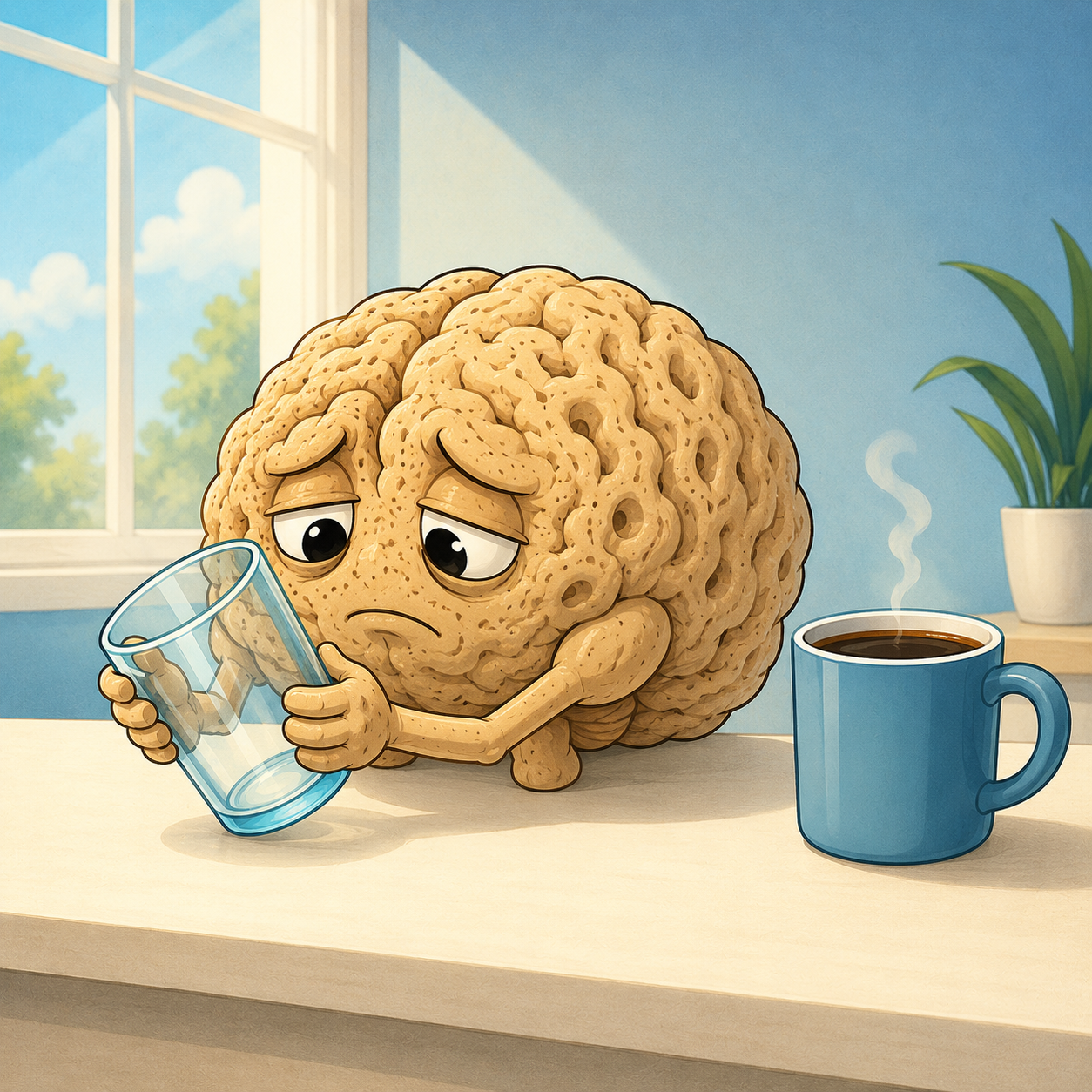
That Afternoon Headache? Before You Blame Stress, Check Your Water
That afternoon headache. The foggy brain. The dry, tired eyes. You think it's stress. It's probably water.
It is 3:00 in the afternoon. Your head hurts. Your thoughts are crawling, and your eyes feel as though someone rubbed them with sandpaper.
Stress gets blamed. The computer gets blamed. Coffee rushes through the door wearing a superhero cape.
Before accepting its rescue, ask one question: When did you last drink water?
Your Thirst Alarm Is Losing Its Volume
When you were younger, thirst may have shouted. As you age, it can become more of a whisper.
Research shows that the thirst response weakens with age, making it easier to fall behind on water without realizing it. Water intake also tends to decline after age 60, largely because this signal becomes less dependable.
Think of thirst as a smoke alarm whose battery is getting weaker. A quiet alarm does not mean there is no smoke. It means you can no longer afford to wait for the alarm.
Your Brain on Low Tide
Your brain depends heavily on water. When water runs low, concentration, energy, and mood can suffer.
Dehydration can even cause small, temporary changes in brain volume. Your brain is not turning into a raisin or rattling around inside your skull. But expecting it to think clearly without enough water is like expecting a dry sponge to clean the kitchen. The equipment is there, but it cannot do its best work.
No wonder everything feels harder.
Drink Before Your Body Has to Beg
Do not wait for powerful thirst. Build water into your day.
Drink after waking, with meals, and around exercise. Keep water where you can see it. A water bottle hidden in a cabinet hydrates approximately no one.
If an afternoon headache or foggy feeling appears, drink a glass of water and give your body time to respond. Do not expect every headache to vanish because headaches have many possible causes.
The fountain of youth cannot flow through an empty fountain. Keep the water running.
---
Want more tips on living younger, longer? Sign up below and I'll send them straight to your inbox.

Your Health & Safety: This site’s content is for educational and informational purposes only and is not medical advice. Please read our Important Medical Disclaimer.